Uncover the Top 10 Indian Defense Vehicles (Arjun Mk 1A, K9 Vajra-T, Armado ALSV) driving Indian Army modernization. A deep dive into “Make in India” Defence Vehicles and key equipment procurement for 2025.
The silence at 18,000 feet is a lie.
It’s 2:00 AM in the unforgiving high-altitude desert of Ladakh. Captain Vikram Singh shivers, not just from the bone-deep cold of $-20^{\circ}$C, but from the raw anxiety coiling in his gut. A forward patrol has reported a significant, aggressive movement across the Line of Actual Control. The threat is immediate, real, and requires a response of surgical precision and overwhelming force.
This is the moment of truth.
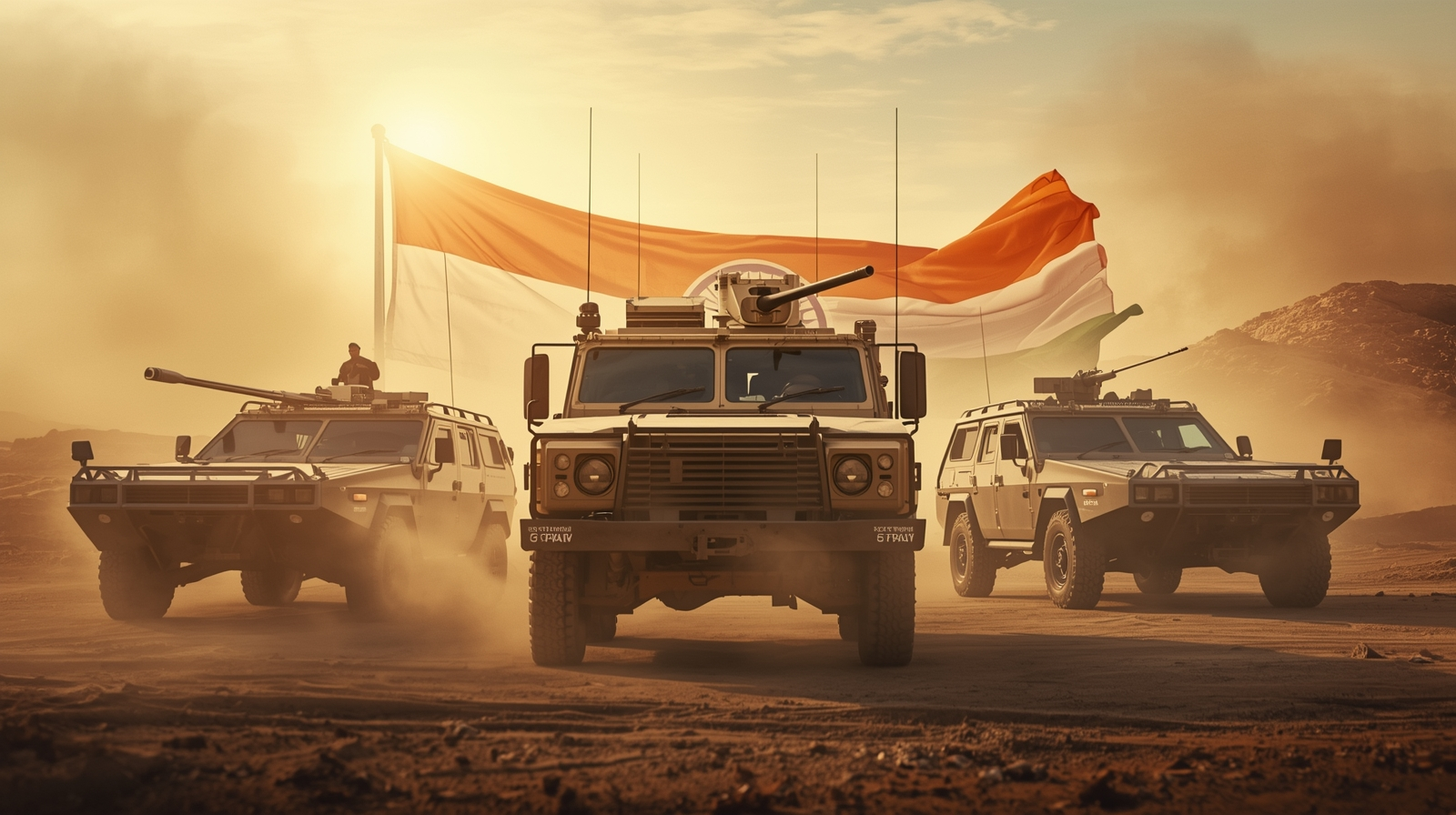
The safety of his soldiers, the integrity of the border, and the confidence of a nation rest on the equipment he commands. He needs vehicles that will not falter in the thin air, that can shrug off a hit, and deliver a knockout punch. As he gives the order, the ground trembles, not with fear, but with the deep, reassuring thrum of a high-power engine. The sleek, rugged silhouette of a Mahindra Armado ALSV darts past, carrying a recon team into the silent, treacherous darkness, promising relief with its speed and protection. Behind it, the heavy tracks of the Arjun Mk 1A Main Battle Tank begin to turn, a colossal statement of indigenous might and security.
This is not a story about logistics. This is about the empowerment of the Indian soldier.
For too long, the narrative of India’s military might has been dominated by air and sea. Yet, the final, decisive battles are fought and won on the ground. The modern Indian Army is undergoing a monumental, quiet revolution—one driven by the roaring engines and advanced armour of its cutting-edge ground vehicles.
This article is your deep dive, a journey to uncover the true Aspiration of a self-reliant India. We will pull back the camouflage net on the Top 10 Indian Defense Vehicles That Power Our Army in 2025. More than a list, this is a strategic analysis of the steel and science that ensures the Indian flag flies high, from the sun-scorched deserts of Rajasthan to the glacial heights of the Himalayas. You’re about to discover which machines are the true backbone of modern Indian combat and how they are changing the global defense game.
More Than Metal: Why Understanding Our Army’s Vehicles Matters 🤔
Why should you, the citizen, care about the difference between an APC and an IFV, or the caliber of a howitzer? Because the equipment procurement decisions of today are a direct investment in the security and sovereignty of tomorrow. Every dollar spent on Indian Defense Modernization Programs is a step toward national self-reliance, a crucial move away from reliance on foreign suppliers.
Understanding these vehicles is understanding India’s strategic vision. It is the core of the ‘Make in India’ initiative in its most tangible, powerful form.
The Indigenous Revolution: ‘Make in India’ Defence Vehicles Leading the Charge 🇮🇳
The shift from being the world’s largest arms importer to a significant defense manufacturer is not a political slogan—it is a colossal, decades-long project yielding fruit in 2025. This focus on domestic production is the high-intent strategic pillar that weaves through all Indian Army Equipment Procurement 2025.
The Core Strategy: Why Self-Reliance is the Ultimate Defence
The ‘Make in India’ initiative in the defense sector is about three core pillars: Autonomy, Adaptability, and Cost-Efficiency.
- ✅ Autonomy: Eliminating dependence on foreign nations for critical spare parts during times of conflict.
- ❌ The Import Pain Point: Facing crippling sanctions or delays from international vendors in a crisis (a core Anxiety for any military planner).
- ✅ Adaptability: Designing vehicles specifically for unique Indian terrains—the ultra-high altitudes of the Himalayas, the marshy plains of the Eastern sector, and the dusty deserts.
- ❌ The Obsolescence Challenge: Foreign equipment can become outdated before it’s even fully inducted. Indigenous design ensures a continuous upgrade cycle.
This indigenous push has created high-value opportunities for domestic firms and has generated some of the most sought-after defense-related keywords, like “Make in India” Defence Vehicles.
Addressing the Pain Point: Is “Made in India” Truly World-Class? (Debunking Myths) 🤯
A common objection is whether Indian-made defense hardware can truly rival established global players. The answer in 2025 is a resounding YES, and the success stories are in the details:
- DRDO’s Role: The Defence Research and Development Organisation (DRDO) has moved from conceptual designs to fielding robust, combat-tested systems, often in partnership with private sector giants like Tata, Mahindra, and Bharat Forge.
- Proof is in the Punch: The Arjun Mk 1A, for example, is not just a tank; it’s a completely redesigned, enhanced system with 14 major improvements over its predecessor, tailored specifically for Indian operational environments. The integration of advanced fire control systems and enhanced protection packages puts it squarely in the league of modern MBTs.
The Unstoppable 10: Elite Combat Vehicles Shaping the Battlefield 🏆
Here is the definitive list of the most critical and combat-ready vehicles that form the armoured and mechanised backbone of the Indian Army in 2025, heavily influencing Indian Defense Modernization Programs.
Category 1: Armoured Might – Main Battle Tanks (MBTs) 🛡️
The MBT remains the undisputed king of the land battlefield, representing the ultimate fusion of firepower, mobility, and protection.
1. T-90 Bhishma: The Reliable Heavy-Hitter
The T-90 Bhishma, an Indian licensed version of the Russian T-90S, is the quantitative backbone of the Indian Armoured Corps. Its sheer numbers and battle-proven design provide crucial deterrent strength.
- Strategic Role: Rapid maneuver and offensive operations in the plains and deserts.
- Key Feature: The Shtora-1 countermeasure system enhances survivability by disrupting incoming guided missiles.
- 2025 Status: Massive fleet size, undergoing critical upgrades for night-fighting and communication.
2. Arjun Mk 1A: The Indigenous Pride 🇮🇳 (The Hunter-Killer)
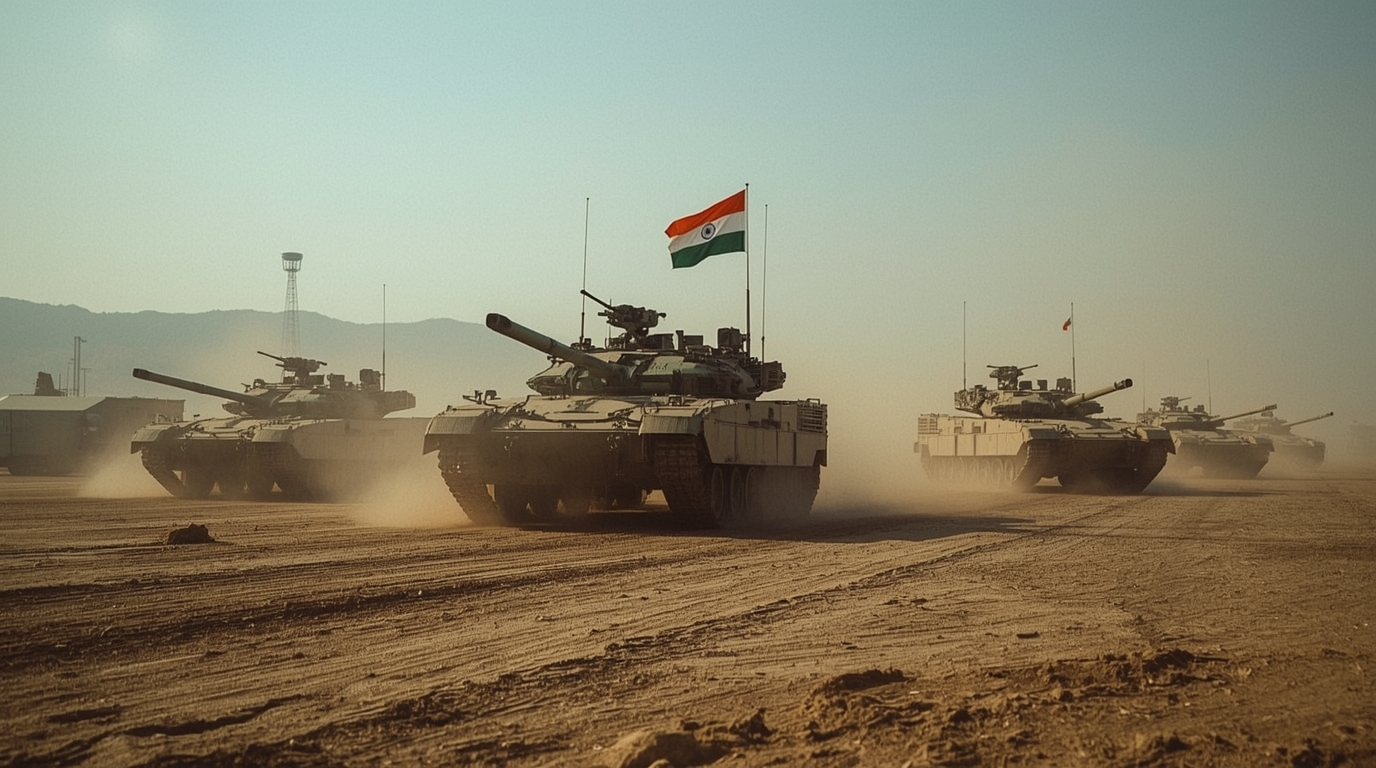
The Arjun Mk 1A is arguably the most significant indigenous vehicle success story. It represents the pinnacle of Indian tank design. The ‘Mk 1A’ is a major overhaul, addressing previous mobility concerns and boosting its fighting capabilities.
- Strategic Role: Frontline combat, particularly suited for maneuver and defence in the desert sector where its heavy armour and potent gun can dominate.
- Key Feature: Kanchan composite armour, a powerful 120mm rifled gun with enhanced penetration ammunition, and an advanced, accurate fire control system.
- High-Value SEO Focus: Arjun Mk 1A Main Battle Tank is a high-value keyword, highlighting the indigenous technical leap.
📊 Pointer Comparison: T-90 Bhishma vs. Arjun Mk 1A
| Feature | T-90 Bhishma (Modernized) | Arjun Mk 1A (Indigenous) |
| Main Gun Caliber | 125mm Smoothbore | 120mm Rifled (More accurate at long range) |
| Protection | Relikt ERA (Explosive Reactive Armour) | Kanchan Composite Armour (Superior indigenous protection) |
| Mobility | Lighter, faster, better for plains maneuver. | Heavier, powerful engine, highly stable firing platform. |
| Indigenous Content | Licensed production, significant import reliance. | >80% Indigenous Content. Represents “Make in India.” |
| Strategic Edge | Quantity and Russian legacy reliability. | Quality, superior protection, and tailor-made for Indian conditions. |
Category 2: The Firepower Edge – Artillery Systems 🔥
Artillery is the “King of Battle,” and India’s modernization efforts here are focused on self-propelled mobility and high-altitude readiness.
3. K9 Vajra-T: The Self-Propelled Thunder ⚡
The K9 Vajra-T Self-Propelled Howitzer is a 155mm, 52-calibre artillery gun built by L&T in India under a technology transfer from South Korea. It is a critical, high-mobility platform, especially in the Western sector.
- Strategic Role: Providing massive, immediate fire support to advancing armoured columns. Its mobility allows it to “shoot and scoot,” avoiding counter-battery fire.
- Key Feature: Fully automated system, rapid rate of fire, and the ability to operate effectively in the desert.
- 2025 Status: The 100-gun initial order is complete, with follow-on orders and high-altitude adaptations being inducted.
4. M777 Ultra-Light Howitzer (ULH): The Himalayan Advantage ⛰️
The M777 is an imported, but utterly critical, system. At under $4,200$ kg, it is the world’s only 155mm howitzer that can be sling-loaded and deployed by helicopters (like the Chinook).
- Strategic Role: Providing artillery support in the mountainous Northern and Eastern sectors where heavy guns cannot be deployed. High-altitude firepower is its primary purpose.
- Key Feature: Ultra-lightweight titanium alloy construction, allowing for rapid air-mobile deployment.
Category 3: Mobility & Protection – Infantry Support 👣
The mechanised infantry needs vehicles that protect them under fire and keep up with the tanks. These are the unsung heroes of battlefield logistics and close-combat support.
5. BMP-2 Sarath: The Workhorse of Mechanized Infantry
The BMP-2 Sarath (Chariot of Victory), manufactured in India, has been the backbone of the mechanized forces for decades.
- Strategic Role: Transporting infantry close to the battle, providing fire support with its 30mm cannon and anti-tank missiles.
- 2025 Status: Undergoing a massive life-extension and upgrade program (BMP-2M), improving night fighting, fire control, and protection to counter obsolescence.
6. Tata Kestrel/WhAP: India’s Next-Gen Wheeled Warrior 💧
The Tata Wheeled Armoured Platform (WhAP), also known as Kestrel, developed with the DRDO, is a state-of-the-art 8×8 Armoured Personnel Carrier/Infantry Fighting Vehicle.
- Strategic Role: Fast, strategic mobility; its amphibious capability makes it vital for operating in riverine and coastal areas. It is the modern, flexible counterpart to the tracked BMP.
- Key Feature: Modular architecture, capable of mounting various weapons, and high level of STANAG ballistic and mine protection.
Category 4: Swift Deployment & Reconnaissance 🎯
Speed, stealth, and protection for specialized forces require a new breed of vehicle. The focus is on smaller, quicker, but heavily protected platforms.
7. Mahindra Armado ALSV: The Light Specialist Vehicle 🔑
The Mahindra Armado ALSV (Armoured Light Specialist Vehicle) is a prime example of an indigenous, quick-reaction vehicle, a clear beneficiary of the “Make in India” Defence Vehicles drive. It is designed to replace older, less protected utility vehicles.
- Strategic Role: Quick Reaction Teams (QRTs), counter-insurgency/counter-terrorism, and high-risk reconnaissance missions.
- Key Feature: Highly configurable, offering STANAG Level II ballistic protection against small arms fire and blast-mitigating seats for crew safety.
📊 Armado ALSV vs. Other Utility Vehicles (Illustrative Data)
| Specification | Mahindra Armado ALSV | Older Fleet Vehicle (e.g., Mahindra Rakshak) | Comparison Pointers |
| Engine Power | 215 hp (approx.) | 105 hp (approx.) | 🚀 Pro: Significantly better power-to-weight for quick escapes and high-altitude. |
| Protection Standard | STANAG Level II | B6 Level (Lower) | ✅ Pro: Higher ballistic and mine/blast protection for modern threats. |
| Drivetrain | 4×4 with Run-Flat Tyres | 4×4 (Often lacks Run-Flats) | 🔑 Key: Run-flat tyres ensure mission completion even after being shot. |
| Crew Capacity | Up to 8 personnel | Up to 6 personnel | 💡 Advantage: Better operational flexibility for specialized teams. |
8. Kalyani M4: The New Standard in High-Mobility Protected Vehicles
Developed by Kalyani Group’s Bharat Forge, the M4 is a multi-purpose, high-mobility vehicle designed to provide superior protection against mines and ambushes.
- Strategic Role: Troop transport and logistical support in high-threat areas (e.g., Jammu & Kashmir, Eastern borders).
- Key Feature: South African design origin, optimized for Mine-Resistant Ambush Protected (MRAP) capabilities, offering world-class survivability.
Category 5: The Future of Battlefield Support 🛠️
The battlefield of 2025 is defined by non-contact, precision engagements and force multiplication. These vehicles carry the strategic weapons of the future.
9. Pinaka Multi-Barrel Rocket Launcher (MBRL) System: The Area Denial Force 💥
Pinaka is an entirely indigenous rocket system that provides a wide area of saturation fire. It is India’s alternative to Russian and US systems.
- Strategic Role: Neutralizing large enemy targets (e.g., troop concentrations, command posts) with a massive salvo of rockets.
- Key Feature: The launcher platform is mounted on a robust BEML/Tatra high-mobility truck, showcasing another successful example of the indigenous automotive-defense connection.
- SEO Focus: Pinaka Multi-Barrel Rocket Launcher (MBRL), a core component of future Indian firepower.
10. Nag Missile System (NAMIS): The “Fire and Forget” Tank Killer 🐍
While ‘Nag’ is the missile, NAMIS (Nag Missile System) is the vehicle platform. It’s a dedicated tracked missile carrier based on the BMP-2 chassis, designed to carry and launch the Nag Anti-Tank Guided Missile (ATGM).
- Strategic Role: Providing over-the-horizon, accurate tank-killing capability to the mechanized forces. Crucial for countering enemy armoured thrusts.
- Key Feature: The Nag missile is a third-generation “Fire and Forget” system, significantly reducing the operator’s exposure to enemy fire.
- 2025 Status: Receiving the Acceptance of Necessity (AoN) for the Mk-II version, reflecting its critical role in the Indian Army Equipment Procurement 2025 list.
Data Deep Dive: Specifications & Strategic Role Comparison 📊
The efficiency of a military vehicle is measured by its numbers—its caliber, its protection level, and its speed. Here, we analyze the core vehicles across key performance indicators.
Tank & APC Comparison: Firepower vs. Protection
| Vehicle Type | Primary Role | Main Armament | Protection Standard | Key Indigenous Component |
| Arjun Mk 1A MBT | Decisive Offensive/Defense | 120mm Rifled Gun | Kanchan Composite Armour (High) | Engine, Armour, Fire Control |
| T-90 Bhishma MBT | Strategic Maneuver | 125mm Smoothbore Gun | Explosive Reactive Armour (High) | Licensed-built Chassis/Assembly |
| Tata Kestrel/WhAP | Wheeled IFV/APC | 30mm Cannon / ATGM | STANAG Level III (Modular) | Amphibious Hull, Modular Design |
| BMP-2 Sarath | Tracked IFV/APC | 30mm Cannon / Konkurs ATGM | Basic Ballistic (Being Upgraded) | Licensed Production & Upgrades |
| Mahindra Armado ALSV | QRT / Reconnaissance | Remote Weapon Station (RWS) | STANAG Level II | Vehicle Chassis, Armor Integration |
Key Performance Indicators: Indigenous vs. Imported (The Case for ‘Make in India’) 🎯
The trend is clear: Indigenous systems are closing the performance gap while offering better strategic flexibility.
| Indicator | Imported (Legacy Systems) | Indigenous (2025 Induction) | The Strategic Value |
| Cost | High initial cost, high lifetime maintenance. | ➡️ Pro: Lower procurement cost, easily available spares. | Lower CPC in the national strategic sense. |
| Adaptation | Required significant, costly modifications for terrain. | ✅ Pro: Designed from inception for high altitude, desert, and riverine operations. | Maximum operational readiness in all theatres. |
| Upgrades | Dependent on the Original Equipment Manufacturer (OEM) roadmap. | 💡 Pro: Continuous, tailored upgrades based on Army feedback (e.g., Arjun Mk 1A). | Future-Proofing against technological obsolescence. |
| Security | Risk of backdoors or proprietary technology denial. | 🔒 Pro: Complete control over source code and systems. | Sovereign capability is priceless. |
The Horizon of Modernization: India’s Future Defense Pipeline 💡
As good as the current top 10 are, the Army’s modernization process is relentless. The future battlefield demands even greater mobility, networking, and autonomy. This is where the next phase of Indian Defense Modernization Programs lies.
What’s Next: FRCV and Other Game-Changers (Indian Army Equipment Procurement 2025)
The most anticipated platform on the horizon is the Future Ready Combat Vehicle (FRCV).
- FRCV: Slated to replace the aging T-72 fleet, the FRCV is envisioned not just as a tank but as a Next-Generation Main Battle Tank (NGMBT) platform. The program aims to create a family of combat vehicles, including light tanks, IFVs, and specialized variants. This is the new, highest-value strategic keyword for the defence sector.
- The Light Tank Project (Zorawar): Crucial for mountain warfare. The decision to induct a new light tank is a direct response to the recent border standoff, highlighting the adaptability of the Indian Army Equipment Procurement 2025 strategy. The indigenous Zorawar is designed to be highly transportable and effective in high-altitude environments.
- Unmanned Ground Vehicles (UGVs): The integration of AI and remote operation systems is inevitable. UGVs for reconnaissance, logistics, and explosive ordnance disposal are moving from R&D to procurement. The establishment of dedicated drone platoons in infantry battalions is the beginning of this transformation.
The Challenge Ahead: Speed of Induction vs. Technological Obsolescence 🤯
The greatest challenge the Indian Army faces is not what to buy, but how fast to buy and induct it.
- The Procurement Delay Hurdle: Historically, bureaucratic hurdles and extensive trials have plagued procurement, causing essential equipment to arrive years late. This is a source of frustration for commanders.
- Overcoming the Hurdle: The new focus on Emergency Procurements and the streamlining of the Defense Acquisition Procedure (DAP) are designed to counter this. Furthermore, by choosing indigenous designs (as highlighted by the success of the Armado and K9 Vajra-T), the Army cuts down the protracted time needed for complex foreign technology transfers.
The Unyielding Resolve: What These Vehicles Truly Represent ❤️
We began this journey feeling Captain Singh’s anxiety at 18,000 feet, relying on the unseen strength of his machines. We end it with the confidence of knowing those machines are not just imported metal, but a powerful, growing testament to Indian engineering and strategy.
The Top 10 Indian Defense Vehicles That Power Our Army in 2025—from the heavy armour of the Arjun Mk 1A Main Battle Tank to the nimble mobility of the Mahindra Armado ALSV and the overwhelming firepower of the K9 Vajra-T—are the silent steel sentinels of the nation. They are the physical manifestation of the “Make in India” Defence Vehicles mandate and the future of sovereign defense. They represent a nation that is ready to fight with its own mind, its own resources, and its own indigenously forged steel.
The true strength of an army is not the number of soldiers, but the empowerment of those soldiers with world-class, reliable equipment. India is, without a doubt, building that force.
Ready to take the next step towards understanding the future of Indian defense technology?