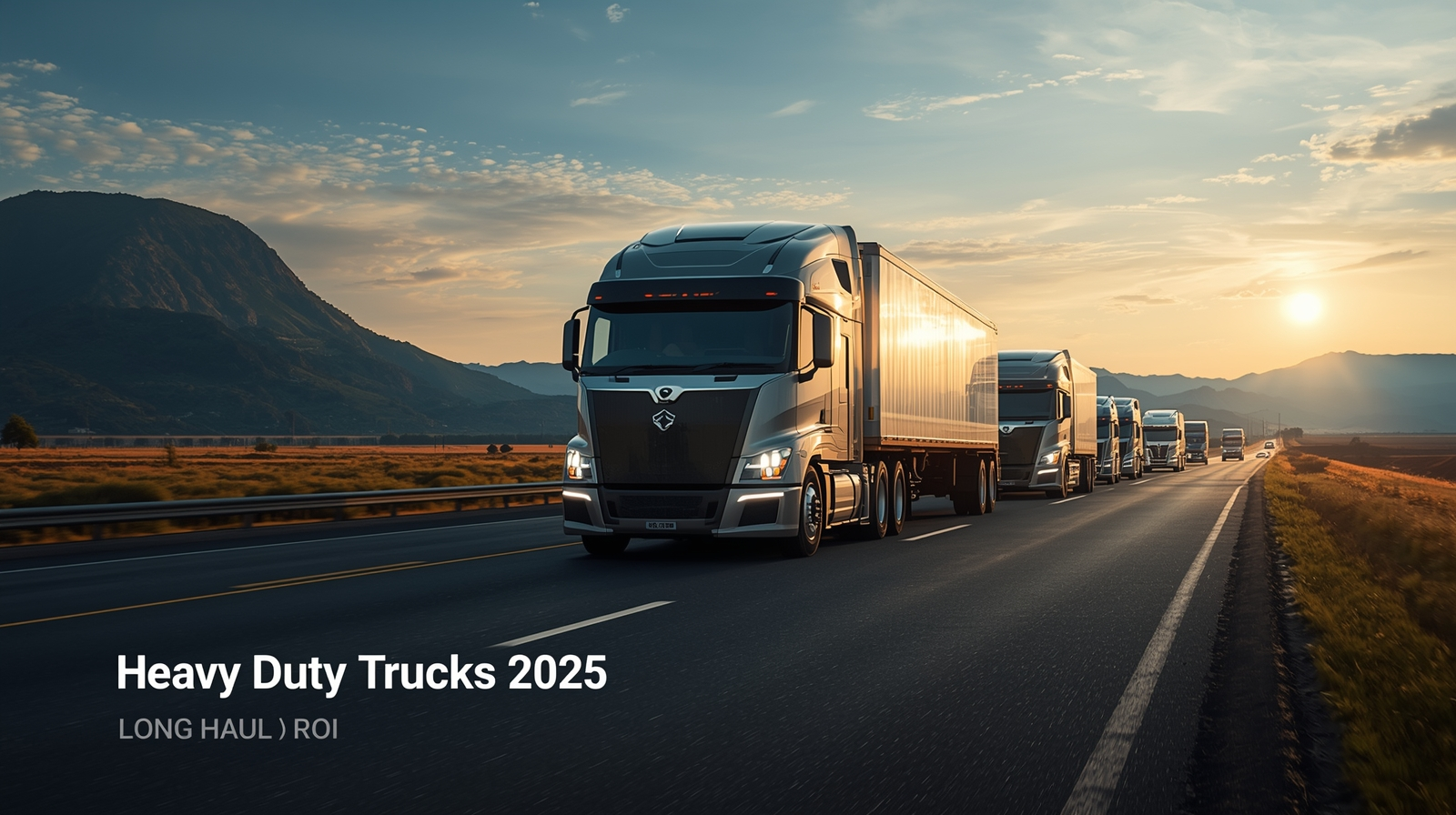
Eliminate the guesswork! This complete guide on How to Choose the Right Truck for Your Transport Business covers TCO, Commercial Truck Financing, New vs Used Commercial Truck analysis, and maximizing Trucking Business Profitability. Make your next $100K decision with confidence.
The truck isn’t just a machine; it’s the engine of your business and the foundation of your future. It’s an investment, a partner, and—if you choose poorly—a bottomless pit of repair bills.
For the aspiring owner-operator or the growing fleet manager, the decision can feel like staring down a hundred-thousand-dollar choice with a dozen variables you don’t fully understand. You feel the anxiety and the confusion that Miguel felt in that garage, wrestling with the financial risk and the glittering promise of independence.
This isn’t just another checklist. This is the definitive, human-friendly guide to eliminating the guesswork, maximizing your trucking business profitability (Secondary Keyword 2), and ensuring your next purchase is your most strategic move yet. By the end, you won’t just know what to buy; you’ll know why you’re buying it, giving you the confidence to move forward.
Let’s turn the fear of a wrong choice 🤯 into the relief of a smart investment 😌.
The Foundation: Defining Your Transport Business Niche 🔑
Before you look at horsepower or financing, you must define the mission of your vehicle. The right truck for a cross-country tanker haul is disastrously wrong for city parcel delivery.
Truck Class: Matching Size to Scope (The GVWR Blueprint)
The most fundamental decision is the truck weight capacity (Secondary Keyword 7) based on its Gross Vehicle Weight Rating (GVWR). This isn’t a suggestion; it’s a hard limit that dictates everything from licensing to required maintenance.
| Truck Class | GVWR Range (Approx.) | Typical Use Case/Niche | Common Truck Types |
| Class 3-5 | 10,001–19,500 lbs | Local delivery, Utility, Small Hot Shot (flatbed/box). | Ford F-450/550, Chevy Silverado 5500, Hino 195. |
| Class 6-7 | 19,501–33,000 lbs | Heavy-Duty Hot Shot, Regional freight, LTL, Medium Box Trucks. | Freightliner M2, International Durastar, Kenworth K370. |
| Class 8 | 33,001+ lbs | Long-Haul, OTR (Over-the-Road), Tractor-Trailer, Bulk Transport. | Peterbilt 389, Volvo VNL, Kenworth T680, Freightliner Cascadia. |
| Why this matters: A small operator often finds the best truck for hot shot (Secondary Keyword 6) is a Class 4-6, which avoids many of the stringent regulations and costs of a Class 8, thus boosting profitability. |
Specialized Freight vs. General Hauling
Your cargo determines the essential truck features.
- Dry Van/Reefer: Class 8 is the standard. Focus on fuel economy, driver comfort (sleeper cabs), and low semi-truck maintenance costs (Secondary Keyword 5).
- Hot Shot/Expediting: Requires speed, maneuverability, and lower initial investment. Focus on high towing capacity pickups (Class 3-5) or medium-duty (Class 6).
- Vocational (Dump, Mixer, Tow): The structure is built into the truck. Focus on chassis durability, PTO (Power Take-Off) options, and high engine torque.
The Ultimate Dilemma: New vs. Used Commercial Truck (Primary Keyword 3)
This is the crossroads where many transport dreams falter. The desire for a shiny, reliable new rig clashes directly with the undeniable financial savings of a used one. Understanding this balance is key to achieving high trucking business profitability (Secondary Keyword 2).
The Pointer Comparison: New vs. Used 📊
| Feature | ✅ New Commercial Truck | ❌ Used Commercial Truck |
| Initial Cost | Expensive 💸 (Often requires heavier Commercial Truck Financing – Secondary Keyword 1) | Lower 💰 (Less capital up front, easier to pay off). |
| Maintenance | Minimal/Predictable (Covered by warranty, lower initial semi-truck maintenance costs) | Higher/Unpredictable (Risk of major component failure, maintenance history is a variable). |
| Technology | Latest safety features (ELDs, Telematics, advanced driver-assist). | Outdated technology (May require costly upgrades to meet DOT compliance). |
| Financing | Better interest rates, longer terms (up to 7 years). | Higher interest rates, shorter terms (3-5 years), stricter requirements. |
| TCO (Cost of Ownership Trucking) | Higher initial depreciation, but lower per mile repair costs early on. | Lower initial depreciation, but higher per mile repair costs can quickly erode savings. |
The Human Takeaway: Risk vs. Reward 🤔
- New Truck: You are paying a premium for peace of mind and warranty protection. This is an excellent choice for a large fleet with guaranteed contracts, or a new owner-operator who cannot afford any downtime.
- Used Truck: You are absorbing the risk of the previous owner’s deferred maintenance in exchange for massive savings on the sticker price. This is viable for the savvy operator with a dedicated, trusted mechanic and a good cash reserve for unexpected repairs. Critical Step: Always, always get an independent, pre-purchase inspection!
The Silent Killer: Total Cost of Ownership (TCO) 💸
A truck’s price tag is a fraction of its true cost. The goal is to maximize trucking business profitability by minimizing TCO, not just the purchase price.
Dissecting the Cost of Ownership Trucking (Secondary Keyword 4)
Your financial planning must account for these five key areas:
- Depreciation: The biggest, non-cash expense. New trucks depreciate rapidly in the first two years. Used trucks hold their value better but start lower.
- Fuel: Often 30-40% of a truck’s operational cost. Look beyond the purchase price; a slightly more expensive truck that gets 1.5 MPG better can save tens of thousands over its life.
- Maintenance & Repairs (Semi-Truck Maintenance Costs): Tires, oil changes, unexpected engine/transmission work. A typical Class 8 truck runs $0.15–$0.25 per mile in maintenance.
- Insurance: Varies by cargo, route, and driving history. Be sure to get quotes before finalizing your purchase.
- Financing: The interest you pay on your loan. This is why securing the best Commercial Truck Financing (Secondary Keyword 1) is paramount.
📊 Illustrative TCO Comparison (Class 8, 120,000 Miles/Year)
| Factor | New Truck (7 MPG) | Used Truck (6.5 MPG) | Difference (5 Years) |
| Depreciation (5 Yrs) | $150,000 | $75,000 | $75,000 Cheaper (Used) |
| Fuel Cost ($4.00/Gal) | $68,571/Year | $73,846/Year | $26,375 More (Used) |
| Maintenance/Repair | $20,000/Year | $35,000/Year | $75,000 More (Used) |
| Total Added Cost (Used) | — | — | ~ $26,375 (Used is more expensive overall due to high repair risk & fuel) |
| Hypothetical Data for Illustration |
The Shocking Insight: The semi-truck maintenance costs and lower fuel efficiency of a cheap used truck can, over 5 years, completely nullify the savings on the purchase price. This is where Frustration turns into Relief—by buying based on TCO, not just sticker price.
Securing Your Investment: Mastering Commercial Truck Financing 🤝
The financial structure is as important as the engine. A bad loan can quickly suffocate a profitable route.
Loan vs. Lease: Which is Right for You?
| Feature | ➡️ Truck Loan (Purchase) | ⬅️ Truck Lease (Operating/Finance) |
| Ownership | You own the asset once the loan is repaid. | Lessor owns the truck; you pay for its usage. |
| Maintenance | Your full responsibility. (High semi-truck maintenance costs risk). | Often bundled into the lease, reducing risk. |
| Taxes | You can depreciate the asset. | Payments can be deductible as operating expenses. |
| End of Term | Keep, trade, or sell the truck. | Return the truck or purchase it for a residual value. |
| Ideal For | Owner-operators focused on long-term equity and high mileage. | Fleet managers who want lower monthly payments, predictable TCO, and want to rotate out of old equipment every few years. |
The Financing Checklist 💡
- Know Your Score: Personal and business credit scores dictate interest rates. Good credit is essential for better Commercial Truck Financing.
- Down Payment: Aim for 10-20%. A larger down payment can drastically reduce your lifetime interest expense and improve cash flow.
- Avoid Long Terms (If Possible): While a 7-year loan lowers the payment, you risk paying interest on a truck that is rapidly declining in value. Shorter terms (3-5 years) are often better for overall profitability.
Future-Proofing: Specs, Tech, and Driver Comfort 🚀
The best truck for your transport business must perform today while anticipating the demands of tomorrow.
Essential Specifications: Beyond the Brochure
| Component | Why It Matters for Profitability/Longevity | Actionable Choice |
| Engine | Torque is more critical than Horsepower for hauling. Reliability minimizes semi-truck maintenance costs. | Look for proven engine platforms (e.g., Cummins, Detroit, PACCAR). |
| Transmission | Manual offers better control and lower repair costs. Automatic/Automated Manual reduces driver fatigue (and turnover). | For OTR, choose automated manual transmission (AMT) for the best balance of efficiency and driver ease. |
| Sleeper Cab | Directly impacts driver retention. A good sleeper cab (high-rise, custom options) is an investment in your people. | Day Cab for local/regional work; Sleeper Cab for anything over 500 miles. |
The Power of Telematics & Fleet Management 🧠
Modern trucks are computers on wheels. Investing in Fleet Management Software is no longer optional—it’s essential for compliance and efficiency.
- Fuel Efficiency: Real-time diagnostics can flag inefficient driving habits, saving thousands in fuel costs (the highest operational expense).
- Predictive Maintenance: Sensors track component wear, allowing you to schedule maintenance before a catastrophic failure occurs, directly reducing unexpected semi-truck maintenance costs.
- DOT Compliance: Ensures mandatory ELD (Electronic Logging Device) and IFTA (International Fuel Tax Agreement) tracking is seamless.
Conclusion: Driving Your Success Home 🎯
Choosing the right truck is the most defining decision you’ll make in your transport business. It’s the moment where aspiration meets the cold, hard reality of the balance sheet.
You’ve moved past the initial confusion and have the data to make an informed, strategic choice. By defining your niche, mastering the TCO model, and leveraging smart Commercial Truck Financing, you’re no longer hoping for success—you are building it on a rock-solid foundation.
Remember Miguel in the garage? The true relief comes not from the purchase itself, but from the confidence that the numbers work, the truck fits the mission, and the investment is sound.
Your success is built one mile at a time, but it starts with this single, powerful choice.
Ready to take the next step towards trucking business profitability? Download our Exclusive Truck ROI Calculator & Financing Checklist to model your true TCO today! 🚀